
Phacelia seeds (Phacelia tanacetifolia Benth.) 1kg
🚚 Shop for €99 or more and get FREE delivery to parcel lockers!
Phacelia (Phacelia tanacetifolia Benth.) is an annual herb that grows up to 90 cm tall, with pale blue or blue-violet flowers arranged in many-flowered, spike-like inflorescences on the main stem and side branches.
Importance for beekeeping
Phacelia flowers open from 6:00 to 20:00, most intensively in the second half of the day, so bees can also be found on the flowers after sunset. Nectar secretion is strongest after light rain, and bees visit the phacelia most at that time. The first flowers appear 40–45 days after sowing and the plant flowers for 45–55 days. The first flowers produce the most nectar, while the least nectar is produced at the end of flowering. Each phacelia flower blooms for two to three days and is visited by about 20 bees during that time. Honey yields can reach 800 kg/ha, with an average of 250–700 kg/ha. The honey is light greenish or colourless, with a pleasant aroma and good flavour. It crystallises slowly and turns white after crystallisation. Phacelia honey does not crystallise in the combs, so it can be used as winter feed for bees. Bees collect blue or blue-violet pollen from phacelia.
Cultivation
Phacelia grows well in various types of light, nutrient-rich, well-drained soil in sunny locations. It flowers especially abundantly and for a long time, and produces nectar well, in sandy loam. Acidic soil is unsuitable; the preferred soil pH is 5.6–6.5. The best preceding crops are clovers and row crops that have received organic fertiliser. If phacelia is sown in fields that have not received organic fertiliser for a long time, incorporate 15–20 t/ha during autumn ploughing; compost can be incorporated in early spring when the soil is cultivated. After harvesting preceding crops such as cereals or legumes, skim-plough the field. If the field is weedy, especially with couch grass, repeat shallow ploughing after two weeks to a depth of 10 cm. Two weeks after that, plough the field to a depth of 25 cm. To allow early sowing, plough the field in autumn. In spring, harrow the soil, cultivate to a depth of 15 cm and incorporate fertiliser. Roll the soil before sowing phacelia seeds and again after sowing. Phacelia responds well to mineral fertilisers, especially phosphorus and potassium: these help each plant form considerably more flowers and increase the honey yield. Recommended mineral fertiliser rates per hectare: 30–40 kg N, 60–80 kg P2O5 and 40–60 kg K2O as pure nutrients. A fertilised hectare of phacelia can produce as much honey as two unfertilised hectares.
Phacelia can be sown both in early spring and in autumn. Spring sowing is done in late April or early May. Crops sown then begin flowering from the second ten-day period of June to the second ten-day period of July, yielding 230–300 kg/ha of honey. If sown at the end of May, phacelia flowers throughout July and yields 128 kg/ha of honey. To extend the flowering period, it can be sown again in spring at intervals of two to three weeks. Schedule sowing so that phacelia flowers exactly when other nectar plants are scarce. The latest sowing date is early July; this provides bees with a late nectar flow in mid-August, after which the green mass can be used as green manure. Phacelia can also be sown in late autumn, in November, when the soil temperature is below 5 °C, so that the seeds do not germinate and seedlings are not killed by frost. Autumn-sown crops begin flowering in late May or early June of the following year and continue until the second ten-day period of July, providing a honey yield of about 200 kg/ha. When phacelia is sown in wide rows (45 cm between rows), the seeding rate is 6–8 kg/ha. Plants in wide rows branch better and form more inflorescences and flowers. On uncultivated, low-fertility and weedy soil, it is better to use conventional row sowing, with an average seeding rate of about 10–15 kg/ha. For broadcast sowing and late-autumn sowing, increase the seeding rate to 20 kg/ha or more. Seed depth is 1–2 cm in heavier soils and 2–3 cm in lighter soils. The seeds must be covered with soil because light inhibits their germination. Phacelia seeds usually germinate in 8–10 days, but if the soil lacks moisture this can take 15–20 days. Newly emerged phacelia is difficult to see because it is the same colour as the soil. Phacelia is frost-resistant; its seedlings withstand frosts down to minus 4–5 °C. If the crop is too dense, thin it with a light harrow so that plants are 8–15 cm apart. Wide-row crops need inter-row cultivation to control weeds.
To extend the flowering period, sow phacelia in mixtures with other nectar plants, such as buckwheat (sow in late May or early June, using 30–40 kg of buckwheat and 5 kg of phacelia per hectare) and mustard (sow in late April or early May, using 6–7 kg of phacelia and 6–8 kg of mustard per hectare).
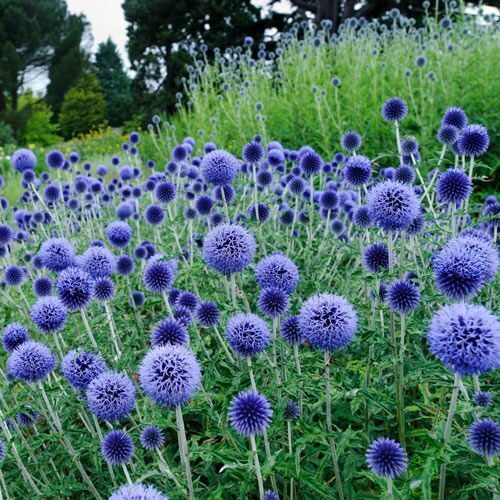
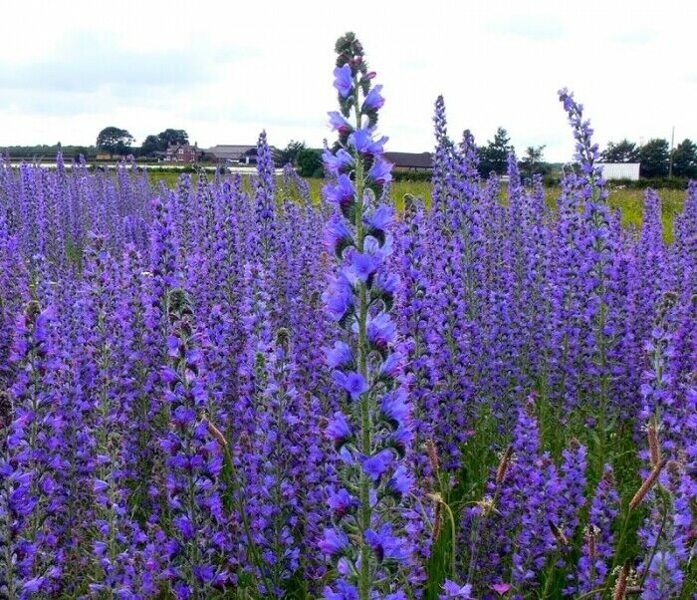
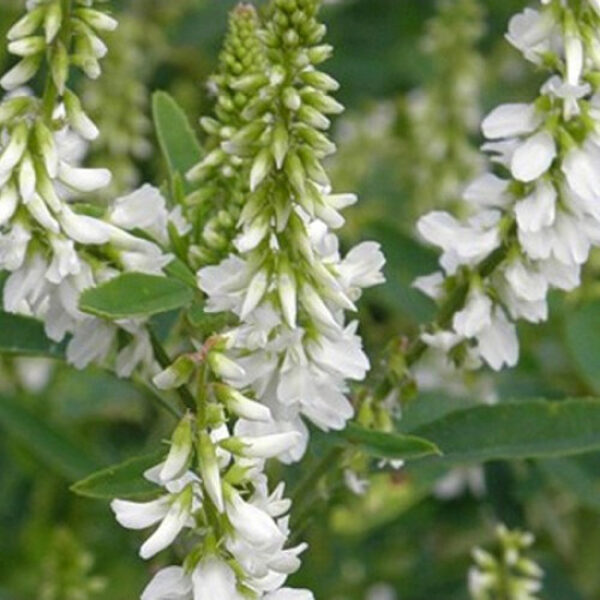
Phacelia is also used as a cover crop for other nectar plants, including white and yellow sweet clover (sow in late April or early May, using 8–10 kg of phacelia and 18–20 kg of sweet clover per hectare), blueweed and globe thistle. One round of soil preparation and sowing can provide a nectar flow on the same area for two years.
Harvest phacelia seeds with a combine when about two-thirds of them have turned brown. Seed yields range from 100 kg/ha to as much as 500 kg/ha. Seeds retain their ability to germinate for two years. Seeds with a moisture content of 13–14% are suitable for storage.
Weight: 1 kg
Harvested in: Druviena parish, Gulbene Municipality, Latvia
Packed in: Baļļas, Turlava parish, Kuldīga Municipality, Latvia
Related products
Customer reviews
★★★★★
Janis A., 7 Jun, 2026
Super ātra piegāde
★★★★★
Alvils, 21 May, 2026
Piegāde notika neticami ātri.
★★★★★
Andris Cerbulis, 14 May, 2026
Ļoti ātri un kvalitatīvi safasēti atnāca Facēlijas sēkla! Mīļš paldies abām saimniecītēm!
★★★★★
Arnis A., 8 May, 2026
Labdien! Pasūtīju 2kg.Facēliju.(šajā veikalā bija labākā cena ko varēju sameklēt)Saņēmu pēc 2 dienām. Sūtījums iepakots normāli, bojājumu nebija. Par sēklu kvalitāti neko pateikt nevaru, jo neesmu vēl stādījis! Pagaidām esmu apmierināts. Ar cieņu, Arnis.
★★★★★
Olga S., 7 May, 2026
Paldies,labas kvalitātes sēklas!
★★★★★
Jekaterina K., 29 Jan, 2024
Pasūtījums tika apstrādāts un nosūtīts ātri,
★★★★★
IRISA K., 28 Jul, 2023
Liels paldies par sūtījumu! Paciņu saņēmu dažu dienu laikā labi iepakotu,arī pasūtīt varēja viegli bez liekām problēmām. Tā tik turpināt!
★★★★★
Rita K., 25 Jul, 2023
Sūtījums pienāca ātri, facēlija jau sadīgusi tukšajā dobē. 😊